Hello:
I have an internal data for NCI-h660 file with 8m mapped pairs (HiSeq, 50bp paired end data) and I have an external dataset (4m mapped pairs, 50 bp paired end generated on GAII).
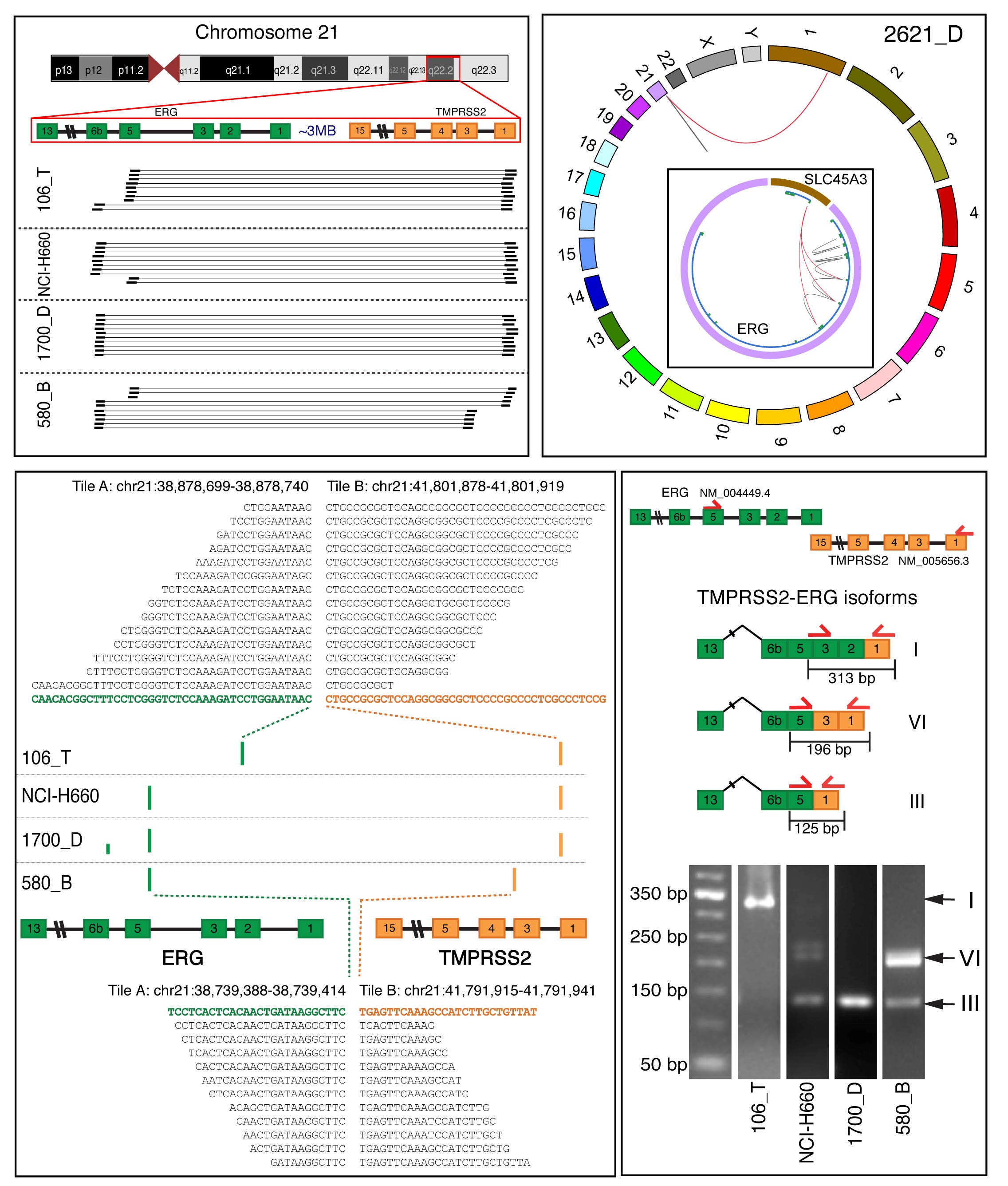
Questions: 1. I observe TMPRSS2-ERG fusion with external dataset, not with internal data from HiSeq. What could be the reasons? I use tophat2 fusion with same parameters for both the datasets.
How can I investigate the FASTQ file to see if this fusion is present. The sequence of ERG-TMPRSS2 fusion is as mentioned here: http://info.gersteinlab.org/images/c/cc/FusionSeq_results.jpg
Does this mean we need more data generated internally to find the same fusion? I use the following possible thresholds that are the minimum possible:
tophat-fusion-post -p $np --skip-read-dist --num-fusion-reads 1 --num-fusion-pairs 1 --num-fusion-both 2 $index
Any help will be greatly appreciated!! Thanks.
1 answer
Use grep to search your fastq for a specific sequence.
Something like
grep -A 2 -B 1 GGAATAACCTGCCGCG myfastq.fastq > junctions.fastq
The -A means "Get 2 lines after the line that matches that sequence". -B means "get the one line before the line that matches the sequence". This will give you the full 4 lines of the fastq entry. If you don't need that, you can omit those two options. Check the rev-comp of that sequence too.
If your fastq is gzipped, use zgrep instead of grep. If you have a .bam file, do this to search the .bam
samtools view mybam.bam | grep GGAATAACCTGCCGCG - > junctions.sam
samtools view is reading the .bam, and converting it to a plain text .sam, and feeding that one line at a time to grep, which is only going to output the lines that contain your sequence to junctions.sam.
Log in to answer this question.