this might be the correct solution. thanks
• 0 views
•
link
Hi, we're working on a scRNA-Seq samples, where R1 has 16bases with the cellular and molecular barcodes, while R2 is 150bases long and contains the genomic sequence.
This data set appears to be very problematic, as it shows many problems. We think that we have sequence into the adapter, as running fastqc shows an over-representation of PolyA stretches and a drop of quality as one can see in the first attachment.
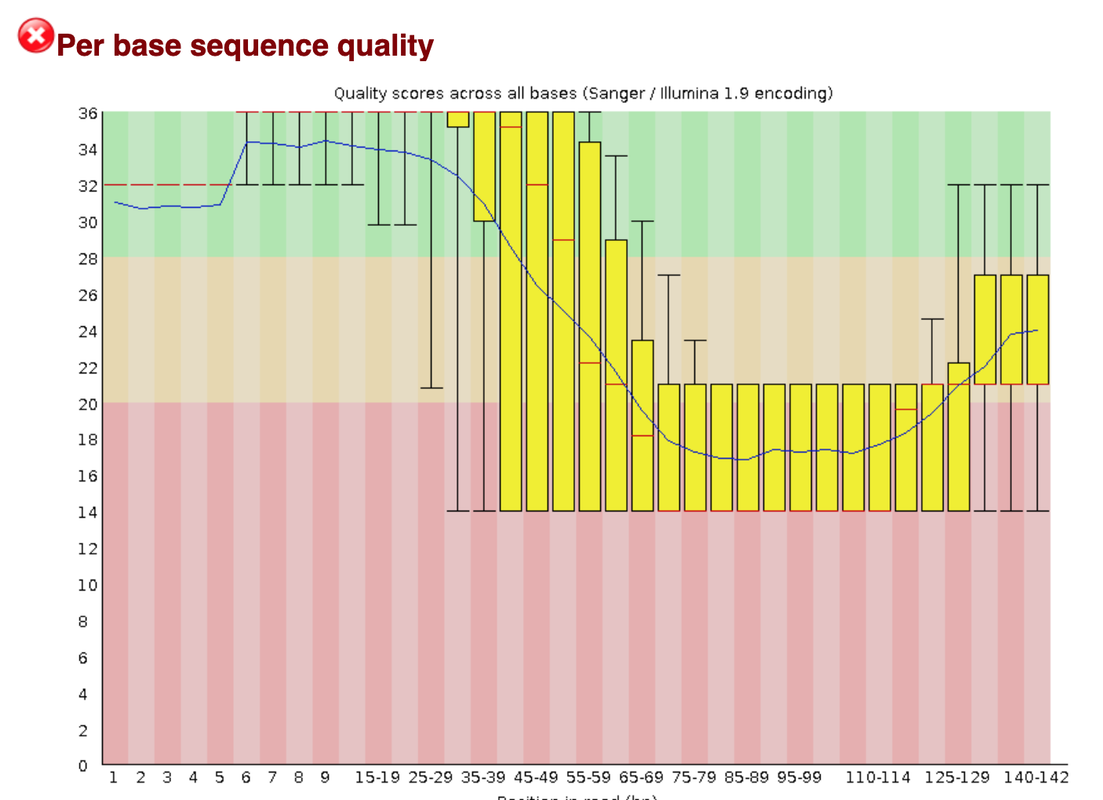
For that reason we would probably hard trim the samples (maybe after qc-trimming)before the quality drop. But what we don't understand is why our R1 shows only stretches of N.
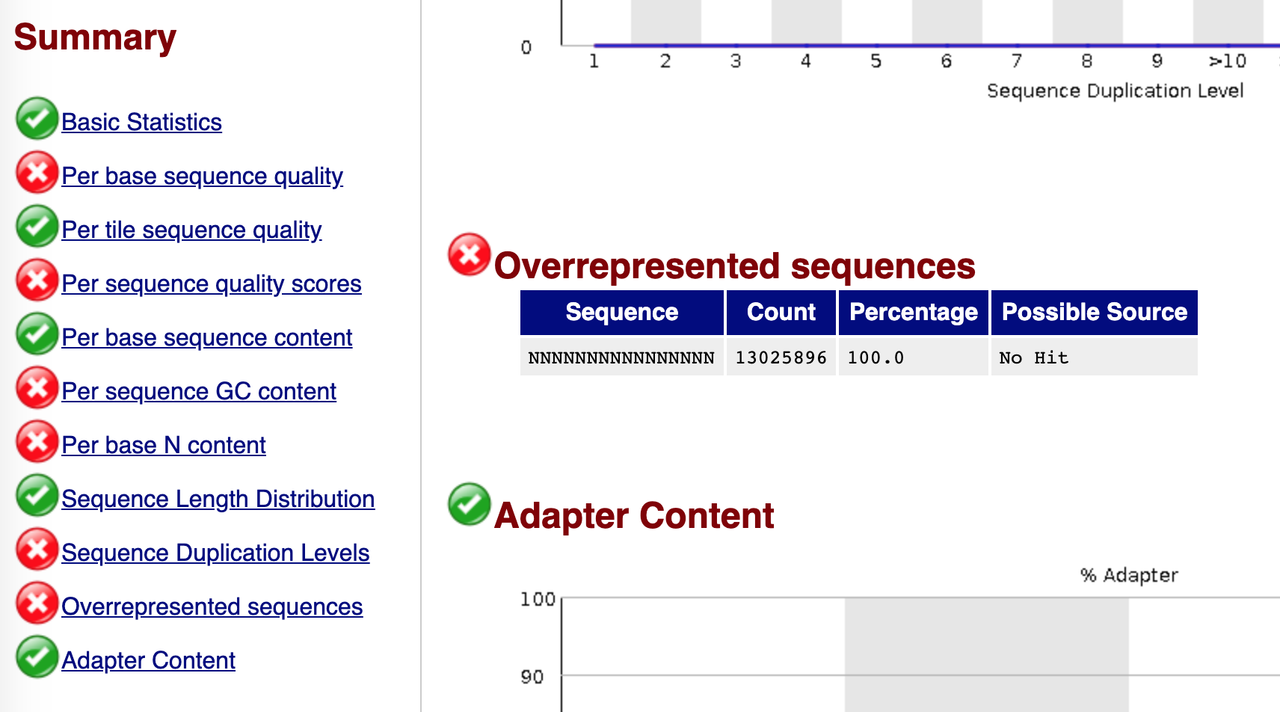
Does anyone has an explanation for this kind behavior? Has anyone seen something like this before? the bcl2fastq did not show any errors at all and the fastq is just a long list of read with ployN stretches.
thanks Assa
You need to use option --mask-short-adapter-reads 0 with bcl2fastq to prevent the short first read from getting masked. Reads less than 25 bp are normally masked with N's.
this might be the correct solution. thanks
The reason for this is that in 10X fragments there is a polyT stretch right after the barcode/UMI part of the read. Once the machine hits this stretch base quality will rapidly drop and will not recover. This does not matter though since BC/UMI comes before this stretch. Therefore you can ignore this fastqc result for R1. Still, this is the reason why you should not mix "normal" NGS libraries with 10x samples because the normal samples would suffer from that quality drop. For 10X the R2 is what actually reads the RNA/cDNA and for this the fastqc result is relevant.
This is true, but this is not 10X samples and the polyA stretches are in R2, not R1.
Log in to answer this question.
Do you have access to the library QC? (pre-sequencing)
yes, but the QC is good